How Offside Rules Can Affect Football Betting Markets


Football betting is closely connected to what happens during the 90 minutes of a match. A goal, penalty, red card or injury can change the direction of a game within seconds. One decision that can have a particularly noticeable effect is an offside call.
For bettors following goal markets, match results, correct scores, player goals or live betting, understanding football offside rules can provide useful context. An attacking move may appear to produce a goal, only for the referee or VAR to intervene. When that happens, the scoreline, match momentum and available betting markets can all change.
Offside is therefore more than just a refereeing rule. It is an important part of understanding how football matches develop and how certain betting markets are settled.
What Is the Offside Rule?
Under Law 11 of the current IFAB Laws of the Game, simply being in an offside position is not an offence. A player is considered to be in an offside position when part of the head, body or feet is in the opponents’ half and nearer to the goal line than both the ball and the second-last opponent. Hands and arms are not considered when determining the position.
However, a player in an offside position is only penalised if they become involved in active play. This can happen by playing the ball, interfering with an opponent or gaining an advantage in certain situations such as a rebound, deflection or deliberate save.
This distinction is important because an attacker can be standing in an offside position without automatically committing an offence.
Why Offside Matters for Betting Markets
Offside decisions can directly affect whether a goal counts. Since many football betting markets depend on goals, a decision made by the officials can influence the final settlement of a market.
Consider a simple example. A team scores in the 72nd minute, but the assistant referee raises the flag for offside. If VAR confirms the decision, the goal does not count. A market that appeared to move in one direction can therefore return to its previous state.
This can be particularly relevant to:
- Match result markets
- Over and Under goals
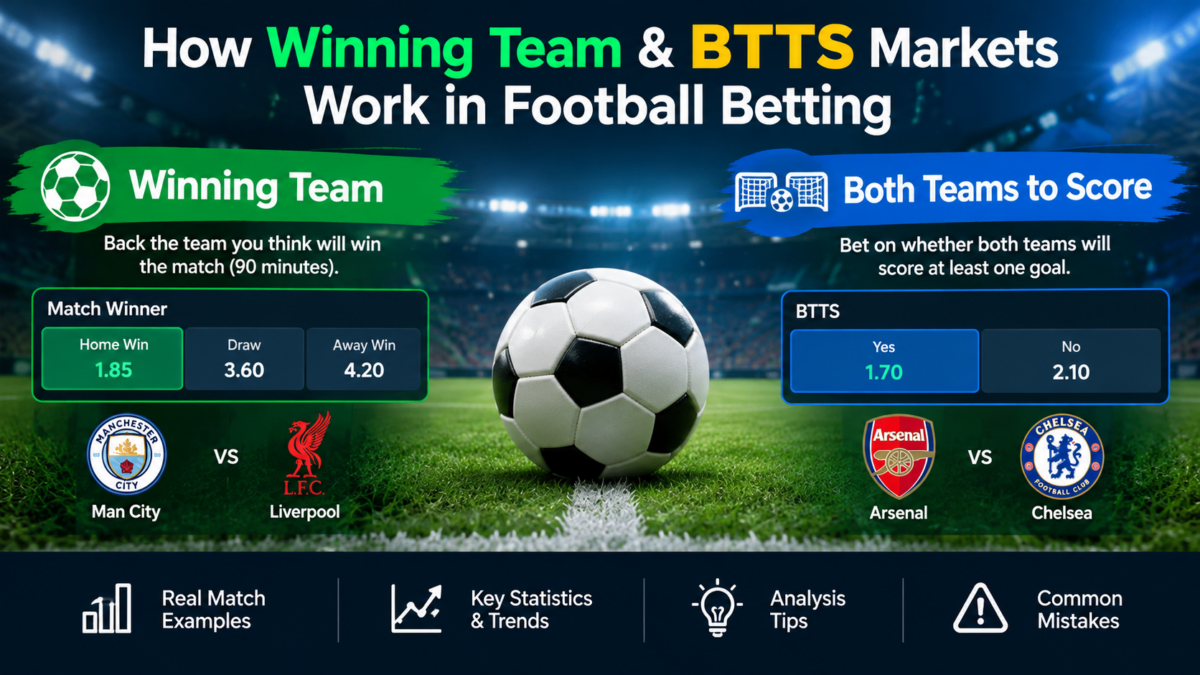
- Both Teams to Score
- Correct score
- First goalscorer
- Anytime goalscorer
- Team goals
- Live betting markets
Understanding this relationship helps explain why odds can move quickly following an offside decision.
Offside and Over/Under Goals Markets
Goal totals are among the markets most obviously affected by offside decisions.
Suppose a match is 1-1 and a team scores what appears to be a third goal. If the goal is ruled offside, the official score remains 1-1. That difference can be significant for an Over/Under 2.5 Goals market.
The same applies late in a match. A disallowed goal in stoppage time can mean the difference between a winning and losing market outcome.
However, the important point is that markets are generally settled according to the official result and the specific sportsbook rules, rather than what initially appears on the live broadcast.
Impact on Both Teams to Score Markets
The Both Teams to Score (BTTS) market is another area where offside decisions can matter.
Imagine Team A scores early but the goal is cancelled because the attacking player was offside. Team A has not officially scored, so the match remains goalless.
If Team B later scores, the BTTS market is still dependent on whether Team A eventually scores a valid goal.
This is why following official score updates is more reliable than assuming every goal shown during a live broadcast has been confirmed.
First Goalscorer and Player Goal Markets
Offside calls can also affect player-specific markets.
A striker may put the ball in the net and celebrate, but if the goal is disallowed, the player has not officially scored. This distinction matters for first goalscorer and anytime goalscorer markets.
The timing of the offside decision can make live betting particularly interesting. A player may appear to have scored, odds may move temporarily, and then the market may change again once the goal is reviewed.
The exact settlement rules depend on the bookmaker and market terms, so checking those rules before betting is important.
VAR Has Made Offside Decisions More Detailed
The introduction of Video Assistant Referee technology has added another layer to offside decisions in competitions where VAR is used.
Offside reviews can involve very small margins, particularly when determining the exact moment a teammate plays or touches the ball and the position of the attacking player at that instant.
The current IFAB Law 11 also explains that an offside offence can involve interference with an opponent, even when the offside-positioned player does not touch the ball.
This means bettors should not assume that every offside decision is simply about a striker being ahead of the last defender.
Offside Can Influence Live Betting Markets
Live football markets react to events as they happen. Goals, cards, penalties and major attacking situations can cause odds to move rapidly.
An apparent goal followed by an offside flag can create a temporary difference between what viewers see and what is eventually recorded officially. Once the decision is confirmed, markets may be adjusted according to the applicable rules.
For anyone following football betting markets, this is one reason patience can be important when a goal is under review.
A live scoreboard may show a goal before the final decision has been confirmed. Waiting for the official outcome can provide a clearer picture of the actual match state.
Why the Timing of the Offside Matters
The moment at which the ball is played or touched by the teammate is crucial when determining an offside position.
This can become especially difficult during fast counter-attacks. A forward may appear to move beyond the defensive line after the pass, but the relevant position is assessed at the moment the teammate plays or touches the ball.
For bettors, this highlights why television angles or a single replay may not always provide the complete picture.
What Should Bettors Check?
Before relying on a football market, it is useful to understand several basic points:
Check the official score: A goal shown on screen may still be under review.
Understand the market: Match result, goals and player markets can have different settlement conditions.
Follow competition rules: VAR procedures and competition-specific regulations can vary.
Avoid reacting too quickly: A goal, penalty or offside call can be reviewed before the market is finally settled.
Read the sportsbook rules: Abandoned matches, postponed fixtures, player participation and goal-related markets can have specific terms.
Readers following football action through Cricbet99 football betting can use the same principle: understand the market first and then follow the match events that directly affect it.
Frequently Asked Questions
Is being in an offside position automatically an offence?
No. Under Law 11, being in an offside position by itself is not an offence. The player must become involved in active play in one of the ways specified by the law.
Can an offside decision cancel a goal?
Yes. If the attacking player commits an offside offence before the goal, the goal can be disallowed.
Does offside affect Over 2.5 Goals markets?
It can. A disallowed goal does not count toward the official goal total, so it can affect whether the final match total finishes above or below a goals line.
Can offside affect a first goalscorer market?
Yes. If a player’s apparent goal is ruled out for offside, that goal normally does not count as an official goal. The specific market settlement rules should always be checked.
Does VAR check every offside decision?
The exact VAR procedure depends on the competition and its protocol. Where VAR is in use, relevant goal and offside situations can be reviewed according to the applicable competition procedures.
Where can I check the official offside law?
The IFAB Law 11: Offside page provides the current official wording and examples covering offside position, active involvement and sanctions.
Final Thought
Offside is one of football’s most important rules because it can change the outcome of an attacking move in an instant. For people following betting markets, its importance goes beyond the referee’s decision on the pitch.
A disallowed goal can affect match result markets, goal totals, BTTS, correct scores and player-related markets. VAR has also made some decisions more detailed, particularly when the difference between onside and offside is extremely small.
Understanding the basic principles of Law 11, following official score updates and checking individual market settlement rules can make football betting markets easier to interpret. As with any real-money betting activity, users should also consider applicable local laws and practise responsible betting.