How Online Casino Games Are Tested Before Launch: Behind the Scenes of Fair and Secure Gaming

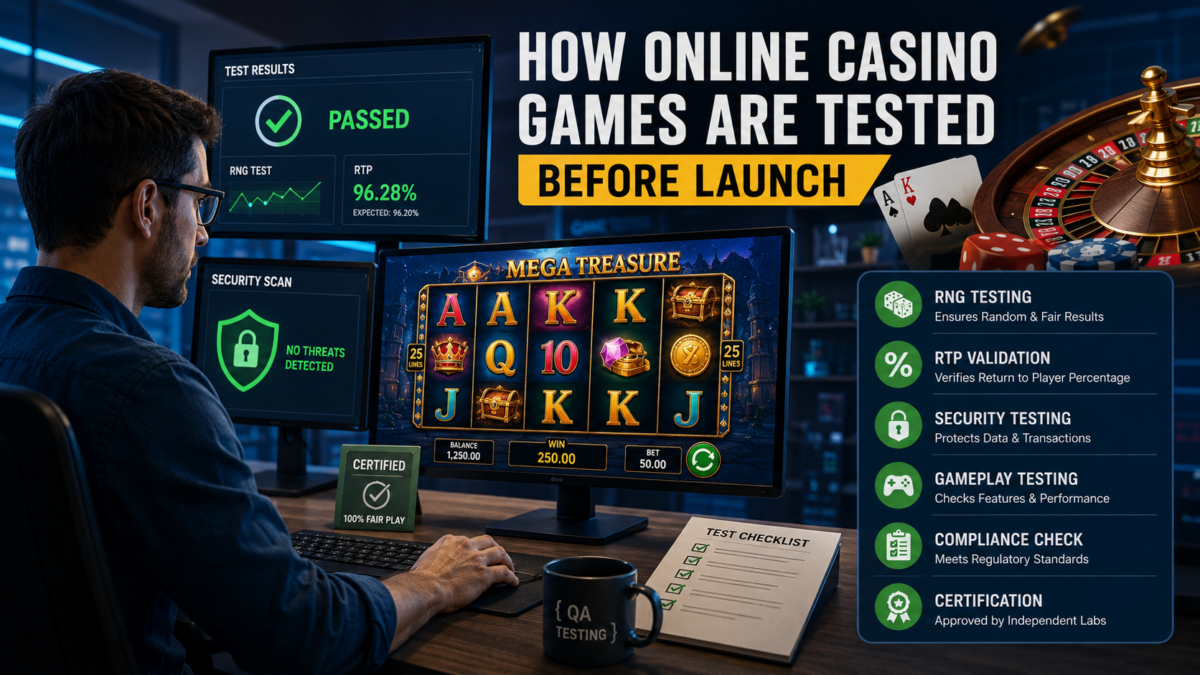
Online casino games may look simple on the surface, but every slot spin, roulette wheel, and blackjack hand goes through an extensive testing process before reaching players. Behind every successful casino game is a combination of software development, security checks, fairness testing, and regulatory approval.
For players, understanding how these games are tested builds confidence in the platforms they choose. For casino operators, rigorous testing helps maintain credibility and comply with international gaming standards.
In this guide, we’ll explore how online casino games are tested before launch, who performs these tests, why Random Number Generators (RNGs) matter, and what players should look for when choosing a trusted gaming platform.
Why Game Testing Matters
Trust is one of the biggest factors in online gaming. Players expect every game to deliver random results, secure transactions, and smooth gameplay without bugs or unfair advantages.
Without proper testing, casinos risk:
- Software glitches
- Security vulnerabilities
- Unfair game outcomes
- Poor player experience
- Regulatory penalties
This is why legitimate online casino providers invest significant time and resources into quality assurance before releasing a game.
Stage 1: Software Development and Internal Testing
The testing process begins long before a game reaches the public.
Game developers first create the mechanics, graphics, sound effects, and gameplay features. Once the development phase is complete, internal quality assurance (QA) teams begin testing every aspect of the game.
During this phase, testers verify:
- Gameplay functions correctly
- Buttons and menus work properly
- Bonus rounds trigger as intended
- Winning combinations calculate accurately
- Animations load smoothly
- Games perform consistently across different devices
Developers often run thousands of simulated game sessions to identify hidden bugs before moving to the next stage.
Stage 2: Random Number Generator (RNG) Verification
Most online casino games rely on a Random Number Generator (RNG).
An RNG continuously produces random outcomes, ensuring that every spin, card deal, or dice roll is independent from previous results.
Testing laboratories evaluate whether the RNG:
- Produces statistically random outcomes
- Cannot be manipulated
- Meets international fairness standards
- Maintains long-term randomness
This step is critical because players should never be able to predict future outcomes based on previous results.
Stage 3: Return to Player (RTP) Validation
Another important part of game testing involves verifying the advertised Return to Player (RTP).
For example, if a slot machine claims an RTP of 96%, testing labs simulate millions of spins to determine whether the game’s actual payout percentage aligns with its published figure.
Although RTP reflects long-term averages rather than short-term results, validating these numbers ensures transparency between developers and players.
Stage 4: Independent Laboratory Certification
Once internal testing is complete, many reputable developers submit their games to independent testing laboratories.
These organizations specialize in verifying fairness, randomness, and compliance with gaming regulations.
Well-known testing companies examine:
- RNG accuracy
- RTP calculations
- Software integrity
- Security protocols
- Game stability
- Regulatory compliance
Independent certification gives both casino operators and players greater confidence that games operate fairly.
Stage 5: Security Testing
Modern online casino games handle sensitive information, including payment details and personal data.
Before launch, developers conduct extensive security assessments to identify vulnerabilities that hackers could exploit.
Security testing typically includes:
- Encryption verification
- Server protection
- Payment security
- User authentication
- Data privacy checks
- Protection against cyberattacks
Strong security safeguards both casino operators and players from potential threats.
Stage 6: Mobile and Cross-Platform Testing
Today’s players use desktops, smartphones, and tablets interchangeably.
A game that performs well on one device but crashes on another creates a poor user experience.
Testing teams evaluate compatibility across:
- Android devices
- iPhones and iPads
- Windows computers
- Mac systems
- Various web browsers
They also test loading speed, responsiveness, and screen resolution to ensure consistent gameplay across platforms.
Stage 7: Regulatory Compliance
Every licensed gaming jurisdiction has its own compliance requirements.
Before launch, games must satisfy technical standards established by gaming regulators. These standards often include fairness, responsible gaming features, security measures, and technical documentation.
Only after meeting these requirements can games receive approval for public release.
Stage 8: Beta Testing
Some developers release games to a limited audience before the official launch.
Beta testing allows real users to identify:
- Unexpected bugs
- User interface issues
- Performance problems
- Gameplay balance concerns
Player feedback often leads to final improvements before the worldwide release.
Continuous Monitoring After Launch
Testing doesn’t stop when a game goes live.
Professional developers continuously monitor performance to identify technical issues, maintain security, and improve stability through software updates.
They also analyze gameplay data to ensure the game continues operating as expected over time.
How Players Can Identify Properly Tested Casino Games
While players cannot inspect a game’s source code, there are several signs that indicate a game has undergone professional testing.
Look for:
- Licensed casino operators
- Transparent RTP information
- Independent testing certifications
- Secure HTTPS encryption
- Reputable software providers
- Responsible gaming policies
If you’re exploring platforms that focus on a wide variety of casino games, responsible gaming information, and secure player experiences, online casino gaming platforms such as CricBet99 can help you understand different game categories while encouraging informed and responsible play.
Common Misconceptions About Casino Game Testing
“Games are programmed to make players lose.”
Licensed online casino games use independently tested RNG systems. Outcomes are random, not manually controlled for individual players.
“Winning patterns repeat.”
Every spin or hand is independent. Previous outcomes do not influence future results.
“Testing guarantees players will win.”
Testing ensures fairness—not profits. Casino games still operate according to mathematical probabilities and the house edge.
FAQs
How are online casino games tested before launch?
They undergo internal quality assurance, RNG verification, RTP validation, security assessments, compliance reviews, and independent laboratory testing before receiving approval.
What is an RNG in casino games?
A Random Number Generator is software that produces unpredictable outcomes, ensuring every game result is independent and fair.
Why is RTP testing important?
RTP testing confirms that a game’s long-term payout percentage matches the value advertised by the developer.
Who tests online casino games?
Independent testing laboratories evaluate fairness, randomness, security, and compliance before games are released to licensed casinos.
Are all online casino games independently tested?
Most games from licensed developers are independently tested. However, games on unlicensed platforms may not undergo the same level of verification.
How can players know if a casino game is trustworthy?
Choose licensed casinos that publish RTP information, use reputable software providers, and display independent testing certifications.
Final Thought
Every successful online casino game represents months of development, testing, and verification before players ever see it. From software quality assurance and RNG validation to cybersecurity assessments and independent certification, each stage is designed to ensure fairness, reliability, and a smooth gaming experience.
For players, understanding this process makes it easier to distinguish reputable platforms from unreliable ones. While no testing process can guarantee winnings, it does guarantee that licensed games operate according to established rules and verified mathematical standards. Choosing trusted platforms and staying informed remains the smartest way to enjoy online casino entertainment responsibly.